
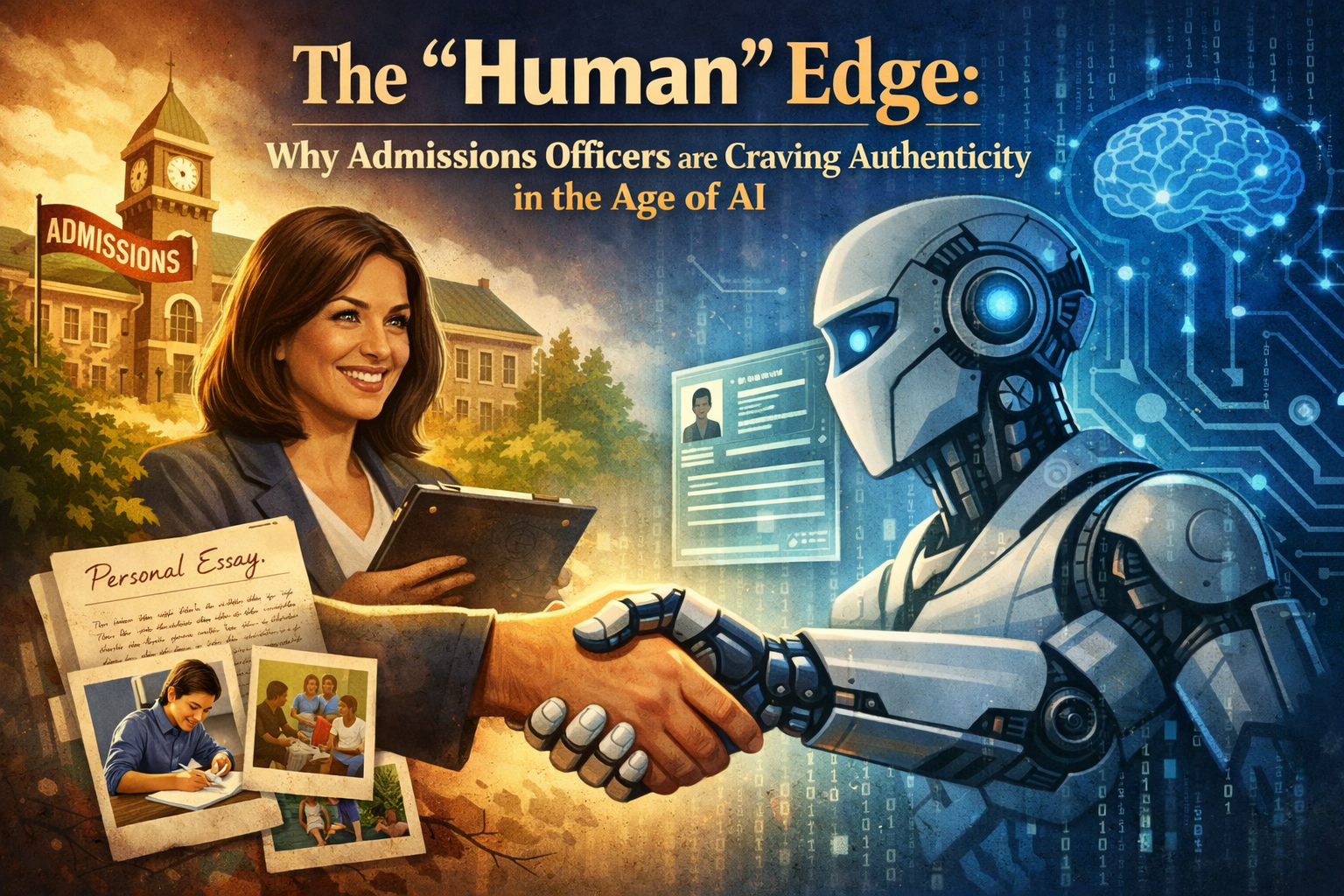
College Essay Coaching is becoming the differentiator for students who want to stand out in a year when applications can feel eerily similar. With more students experimenting with AI in college admissions, schools are seeing a wave of polished writing that often lacks a real voice or specific lived detail.
The New Reality: “Perfect” Essays Are Blending Together
In the past, a clean, well-structured personal statement could stand out on its own. In 2026, that bar is higher—not because students suddenly became better writers, but because tools make “smooth writing” easy. Many applicants now use AI tools at some stage of drafting, and research has suggested a substantial share of students have used AI for essay help.
Here’s the problem: when a lot of essays are produced from similar prompts and patterns, they start to sound like the same student in different outfits. Admissions readers are trained to spot writing that feels generic, overly symmetrical, or strangely detached from real experience—especially as AI in college admissions becomes more common.
College Essay Coaching helps you reverse that sameness by focusing on the parts no model can fake convincingly: personal specificity, emotional truth, and the logic of real memory (messy, surprising, imperfect).
What admissions readers actually want to learn
They’re not only scoring grammar. They’re looking for:
- How you think under pressure
- What you care about when nobody is grading you
- What you learned the hard way
- How you reflect (not just what you achieved)
Why “Human” Writing Wins: Specificity, Vulnerability, and Proof of Life
The antidote to AI-sameness isn’t “trying to sound more poetic.” It’s writing that carries proof of real life: concrete moments, sensory detail, honest uncertainty, and growth that’s shown rather than declared. That’s what Authentic storytelling does—it creates an essay that feels like a person, not a template.
At the same time, students need to be thoughtful about boundaries and ethics. Many schools and educators warn that letting AI replace your voice can make your application less meaningful—and can create integrity risks if generated text is presented as fully your own work. This is why it’s smart to understand maintaining integrity in the application process before deciding how (or whether) to use AI as a tool.
College Essay Coaching gives you a structured way to keep the work genuinely yours while still benefiting from modern resources responsibly.
Signs your essay is “AI-same” and needs a human rewrite:
- The introduction could apply to almost any student
- Big claims (“I learned leadership”) without a specific scene that proves it
- Sentences that are polished but emotionally flat
- “Over-explained” morals that feel like a lesson instead of reflection
- A voice that sounds older, more formal, or unlike how you actually speak
A quick self-check question
If someone removed your name, would a friend still recognize you in the writing? If not, your essay needs more humanity—more you.
The Coaching Difference: Turning Real Moments Into Standout Narratives
Most students don’t struggle because they have “nothing to say.” They struggle because they don’t know how to structure meaning from real moments without sounding cliché. This is exactly where College Essay Coaching becomes an advantage: it converts lived experience into a compelling narrative arc—without exaggeration, without manufactured drama.
If you want hands-on support, start here: expert college essay coaching.
A strong essay is not a diary entry and not a résumé recap. It’s a focused story that reveals values through action and reflection. Done well, Authentic storytelling creates a signal admissions officers can trust—especially in a season where AI in college admissions has made “clean writing” less impressive by itself.
Our practical process for building a human essay:
- Story mining: identify 5–10 real moments with tension, change, or insight
- Theme selection: choose one clear “so what” that fits the school’s prompt
- Scene building: write one vivid moment (place, time, dialogue, stakes)
- Reflection layering: show what changed in your thinking and why it matters
- Voice polish: tighten wording while protecting your natural tone
What “voice” really means
Voice isn’t slang. It’s honesty, rhythm, and specificity. It’s how you notice things, what you admit, and what you choose to emphasize.
4. How to Stand Out Without “Performing”: The Human Edge You Can Control
The goal is not to write a perfect essay. The goal is to write a believable one. Believable essays have edges: a hard decision, a personal contradiction, an uncomfortable lesson, a moment you didn’t handle flawlessly the first time. That kind of writing is rare—and it reads as real.
You don’t need to “confess” something extreme to be compelling. You need to be precise and self-aware. The best Authentic storytelling often comes from small moments told with clarity: the day you realized a habit was hurting someone, the exact sentence that changed your perspective, the awkward silence you still remember.
If you’re applying in 2026, assume readers are seeing a lot of “well-written” pages. Your competitive advantage is the part that can’t be automated: lived detail, honest reflection, and a consistent voice from start to finish. That’s what College Essay Coaching is designed to unlock in a way that stays ethical, personal, and unmistakably human.
FAQs
1) Can I use AI at all when writing my college essay?
Many students use AI for brainstorming or outlining, but you should avoid letting generated text replace your voice. Schools and educators have warned that AI-written content can become formulaic and less meaningful.
2) What makes an essay feel “authentic” to admissions officers?
Specific scenes, real constraints, and honest reflection. A strong essay shows how you think—not just what you’ve done.
3) Will AI detectors flag my essay even if I wrote it myself?
False positives can happen, and policies vary by institution. The safer approach is to keep your drafting history (notes, outlines, version history) and ensure the final voice clearly matches you.
4) How early should I start my personal statement?
Ideally 6–10 weeks before deadlines so you can draft, reflect, and revise without panic-editing. Strong essays usually take multiple rounds to get the voice right.
5) What does essay coaching actually help with?
Topic selection, narrative structure, voice, clarity, and revision discipline. Coaching helps you avoid cliché arcs and build a story that feels original, credible, and memorable.


